AHYA’S CORE PRODUCTS
AhyaOS
Tawazun by Ahya
Ahya ClimateX
Packages
AhyaOS Pricing
.png)
The Partnership for Carbon Accounting Financials (“PCAF”) is an industry‑led initiative that provides a standardized framework for measuring and reporting greenhouse‑gas (“GHG”) emissions associated with financial institutions’ lending and investment portfolios.
The PCAF’s Global GHG Accounting and Reporting Standard (hereinafter “PCAF Standard”) supports the global goal of limiting global warming to 1.5°C in-line with the Paris Agreement (2015) (“Paris Agreement”) by enabling financial institutions to quantify and manage emissions associated with their lending and investment activities — referred to as financed emissions. These emissions fall under Scope 3, value-chain emissions, specifically category 15, investments, aligning the PCAF Standard with broader GHG accounting frameworks and net-zero objectives. Key global PCAF members include ABN-AMRO, Bank of America, Barclays, BlackRock, Deutsche Bank, Emirates National Bank (“ENB”), First Abu Dhabi Bank, HSBC, Morgan Stanley, Riyad Bank, and the United Nations-convened Net-Zero Asset Owner Alliance.
Banks, asset managers and insurers are under increasing pressure to account for the emissions their financing activities enable. Since financed emissions typically exceed 99% of a financial institution’s emissions footprint, accurately measuring them is indispensable for setting credible net‑zero targets. The PCAF Standard responds to this need by offering detailed calculation guidance — foundational for risk management, disclosure and performance tracking.
Transparent GHG accounting allows institutions to identify emission‑intensive sectors, align their portfolios with the Paris Agreement and make strategic decisions on capital allocation. PCAF membership encourages institutions not only to disclose financed emissions but also to develop programmes to reduce them. For example, ENB has put in place a Sustainable Finance Framework that supports the issuance of instruments designed to fund and refinance activities aligned with the transition to a low-carbon, climate-resilient economy, while also generating positive social outcomes and addressing key societal challenges. These range from Green, Blue, Social, and Sustainability finance instruments.
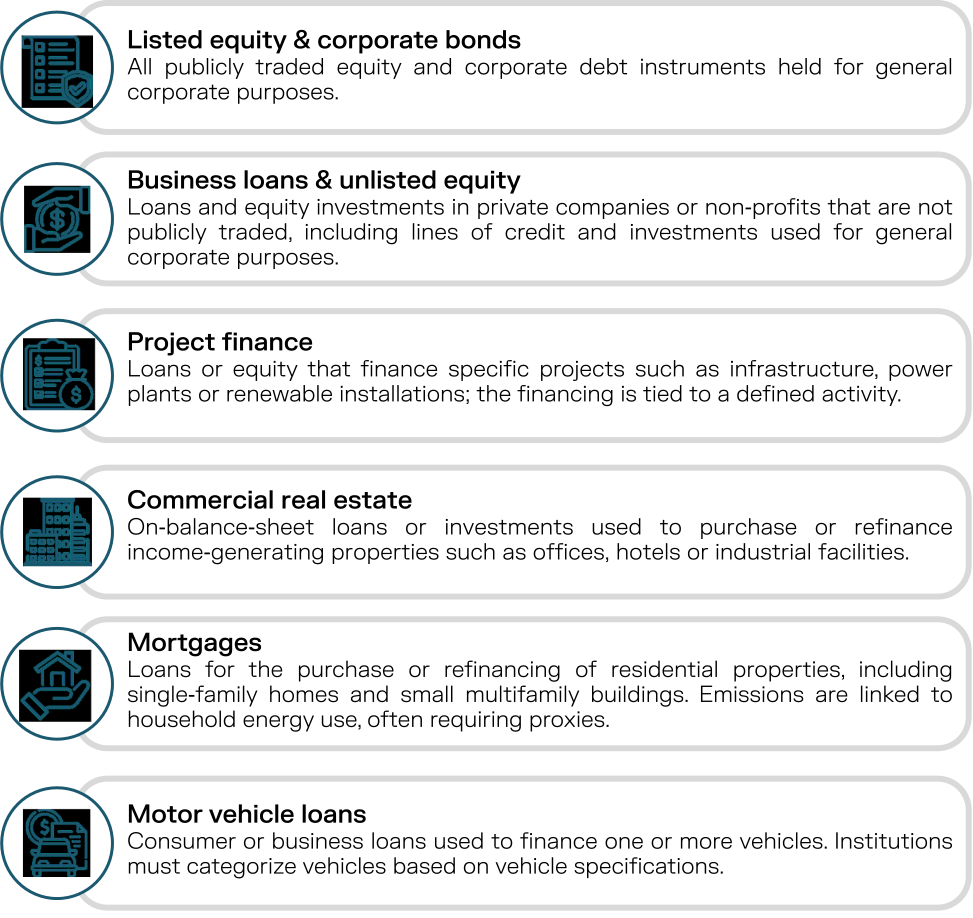
Financial institutions must disclose the proportion of their portfolio covered by PCAF methods and highlight any assets currently outside the framework.
In many emerging markets — including the Middle East, North Africa and Pakistan — awareness of PCAF is growing but adoption remains limited; a 2025 guide by Ahya notes that only about 15 of roughly 250 financial institutions have aligned with PCAF. Institutions struggle with data challenges, and non‑adoption exposes them to regulatory and strategic risks. AhyaOS embeds emissions intelligence into investment and credit decisions.
AhyaOS, Measure aligns with the PCAF Financed Emissions Standard by integrating all 6 asset classes and recognising all three options of emission data, while incorporating the data quality scores.
AhyaOS, Catalogue consolidates all financed entities across the portfolio, capturing financing type, outstanding amounts, and relevant denominator values. By centralising this data at the portfolio level, it enables automated, consistent calculation of PCAF attribution factors, ensuring emissions are proportionally allocated to financial exposure while eliminating repetitive manual inputs.
AhyaOS, Activity Checklist operationalises PCAF methodologies through an intuitive, hierarchical workflow designed for cases where financial institutions already possess emissions or activity data from their clients. After the user selects the relevant PCAF activity, AhyaOS automatically retrieves financial values from the Catalogue and sequentially assesses data availability; reported emissions, physical activity data, or economic activity data. Based on the user’s responses, the system dynamically presents the appropriate data-entry form, applies the corresponding PCAF calculation methodology, assigns the correct data quality score, and calculates attributed emissions.
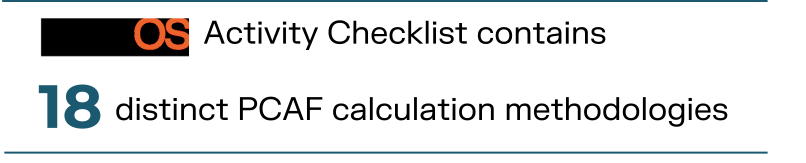
The Activity Checklist currently covers six (6) PCAF asset classes mapped across eleven (11) activities, supporting eighteen (18) distinct PCAF calculation methodologies. Emissions are computed using AhyaOS’s built-in library of 600,000+ emission factors sourced from over 60 global databases, including PCAF, IPCC, UK DEFRA, and the US EPA.
.svg)
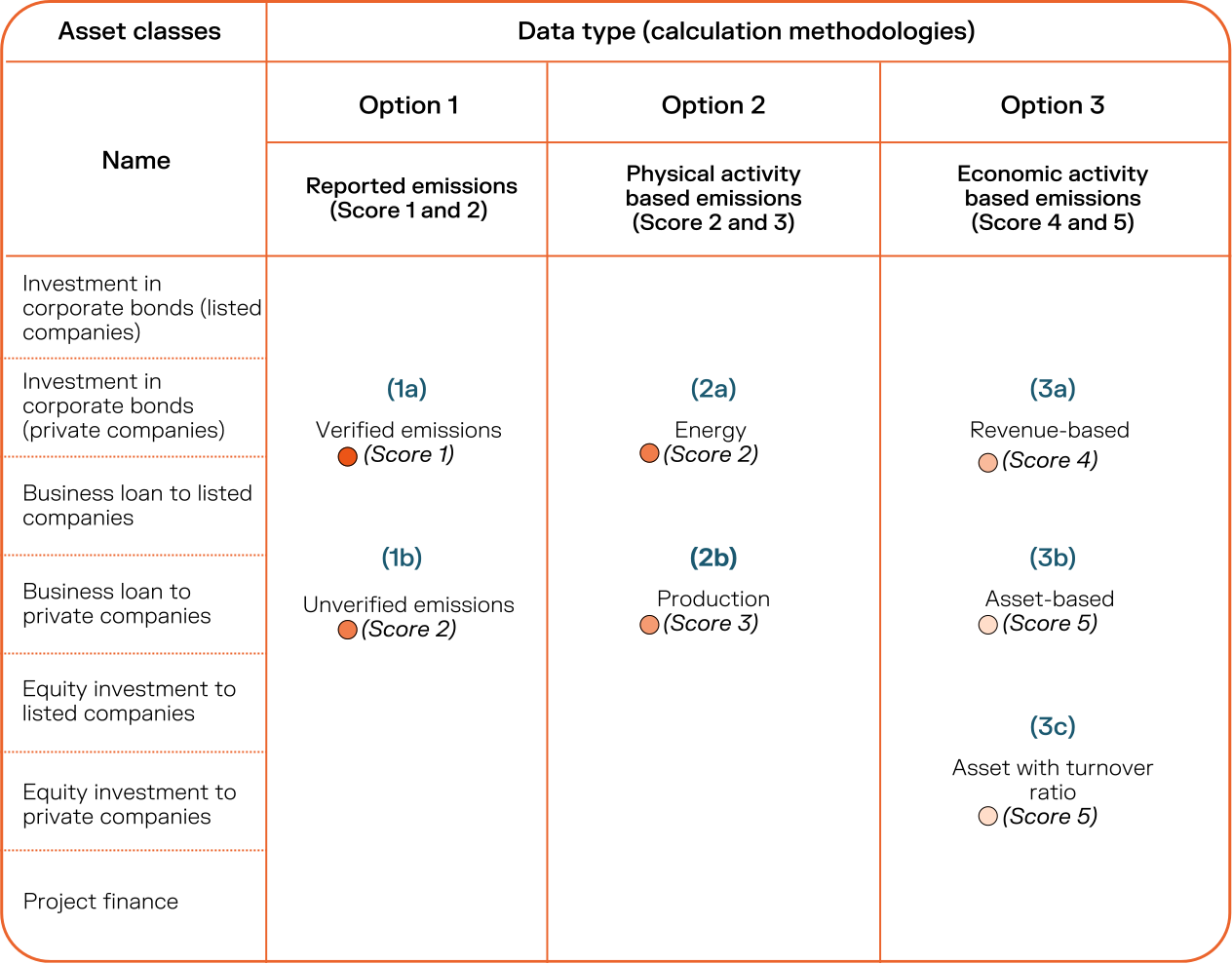
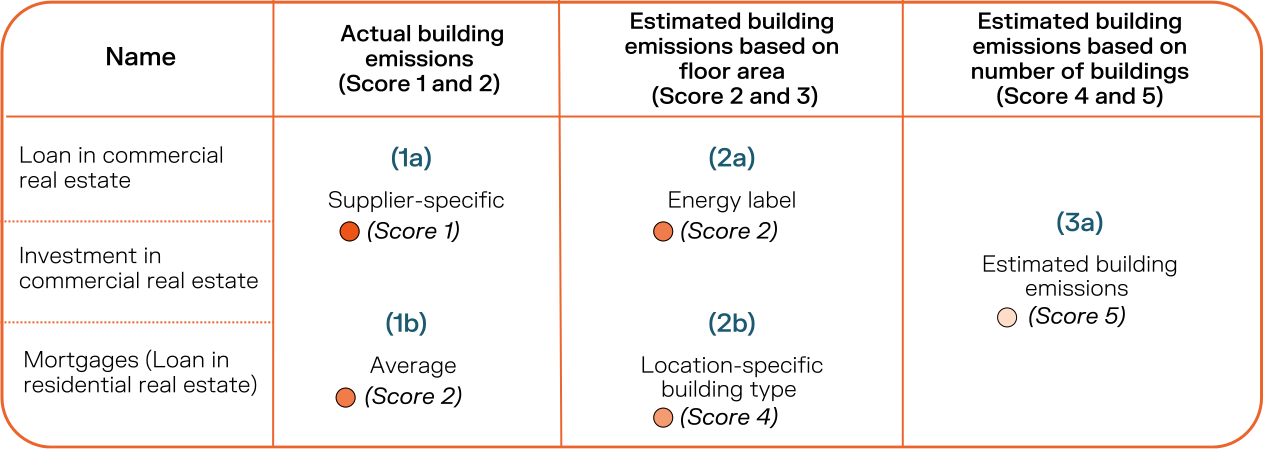
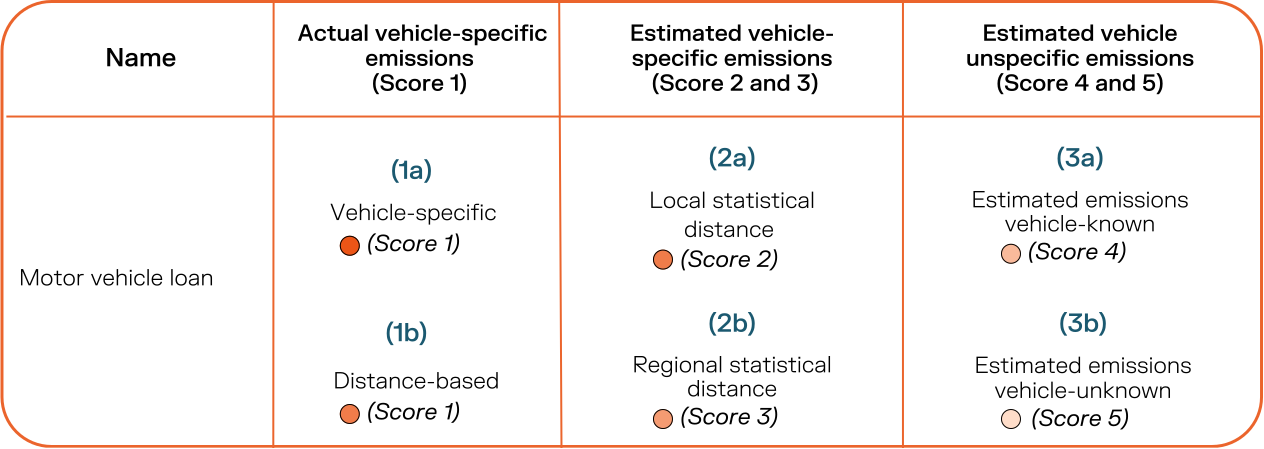
Data quality scoring across asset classes, aligned with AhyaOS.
(Score 1 = highest data quality; Score 5 = lowest data quality)
AhyaOS, Collect enables financial institutions to digitally consolidate emissions activity data when such information is not readily available internally. Through structured, digital data requests, institutions can directly engage borrowers and investees to collect emissions-relevant activity data in a consistent and standardised format aligned with PCAF methodologies.
Once data is submitted, AhyaOS automatically applies financial attribution, calculation logic, and PCAF data quality scoring. Collect improves portfolio coverage, reduces dependence on low-quality proxies, and establishes a clear, auditable pathway for progressive data quality improvement across the financial portfolio.
AhyaOS, Analyze helps identify emissions hotspots and exposure to physical and transition risks across asset classes, sectors, geographies, and individual financed entities. It tracks absolute and intensity-based emissions, supporting benchmarking against internal baselines, supporting risk-informed capital allocation, and portfolio steering.
Financial institutions must translate insights into actionable reduction strategies aligned with net-zero and regulatory expectations. AhyaOS Reduce enables structured target-setting and portfolio-level decarbonisation planning.
The platform supports asset-class-specific reduction pathways across asset classes, reflecting data quality levels and realistic transition timelines. It also enables SBTi-aligned target setting and tracking, allowing institutions to monitor near- and long-term financed emissions reductions in line with the Paris Agreement.
Transparent and standardised disclosure is essential for regulatory compliance and stakeholder credibility. AhyaOS, Report converts financed emissions data and portfolio insights into regulator-ready disclosures in line with GHG Protocol, GRI, and IFRS S2, ensuring methodological consistency and traceability. Built-in audit functionality enables third-party assurance.
Turn financed emissions into a strategic advantage by unlocking green capital, strengthening market credibility, and enabling smarter, data-driven transition decisions.